
ECG Training
iPhone, iPad and Android. Veterinary ECG education.
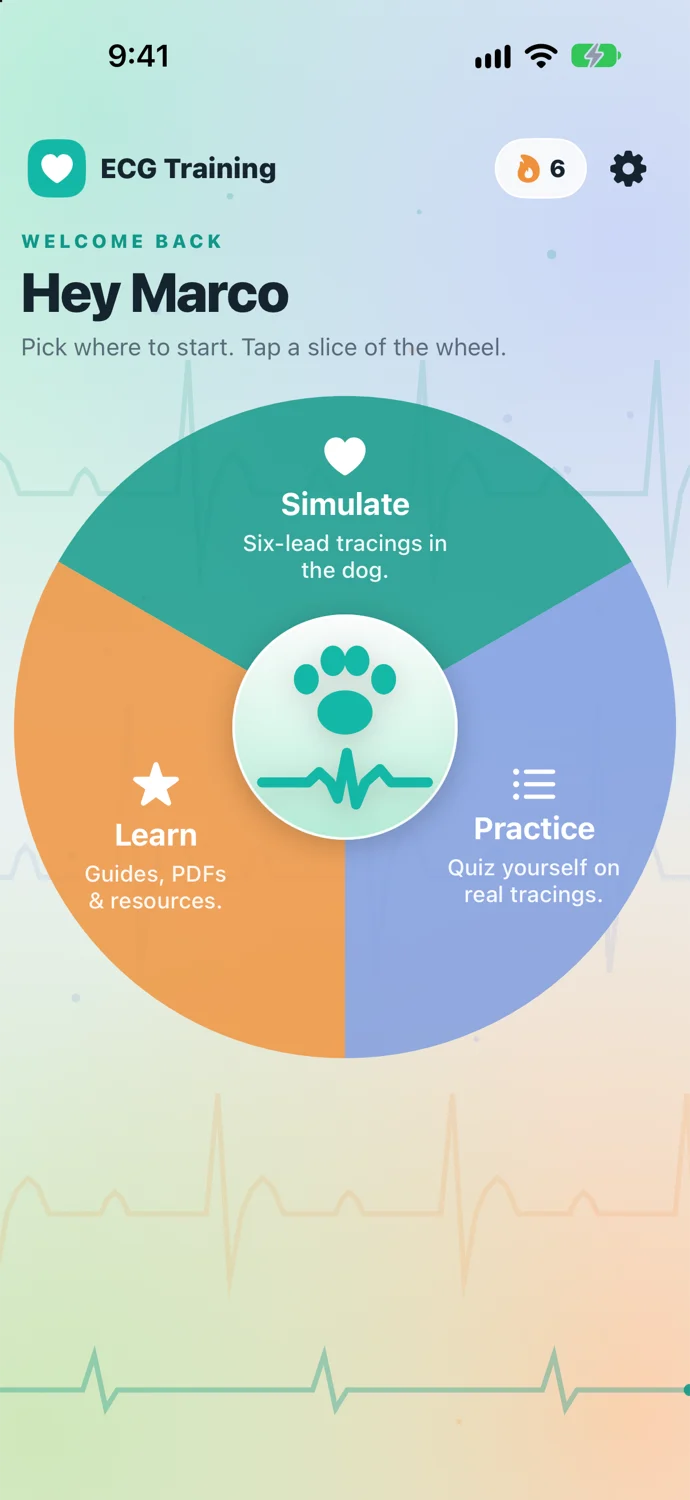
Practice every heart condition without waiting for the patient. A live canine ECG simulator, a learning game and a study library, for the rhythms that are hard to see in live animals.
The rhythm you need is never in the room.
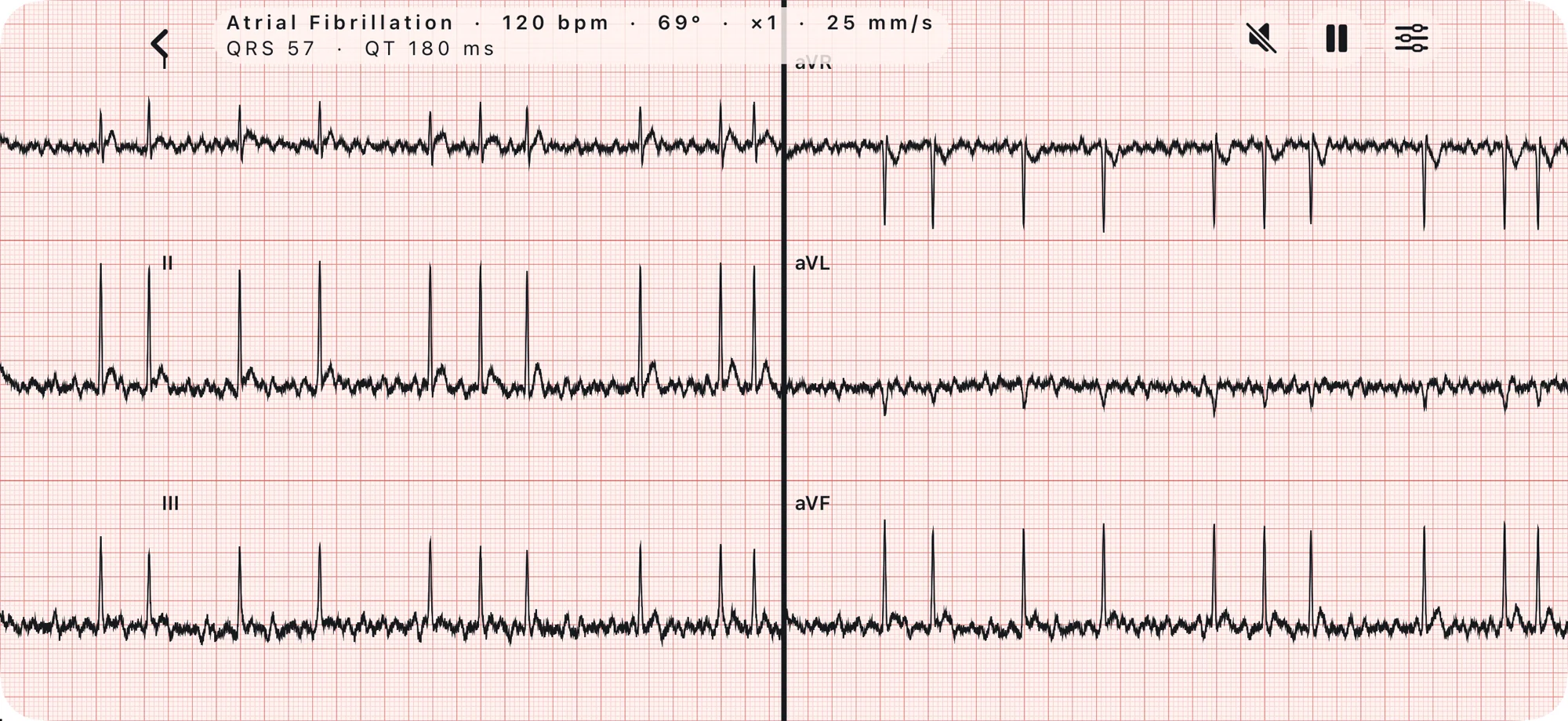
Students, nurses and vets often finish training having never seen atrial fibrillation, complete AV block or ventricular tachycardia on a real monitor, because no animal with that condition was available.
ECG Training puts each one on the screen, as many times as you need. It is made for vet students, licensed veterinary nurses and practising vets who need safe, repeatable cardiology practice.
- 20canine heart conditions: normal, emergency, blocks, ectopics and more
- 6leads, live: I, II, III, aVR, aVL and aVF
- 7levels, from naming one wave to reading a full rhythm
- 2languages: English and Spanish
20 conditions, all included
Each one is generated by the engine, not played from a recording. Ask for a new dog and you get a new tracing of the same condition.
- Normal Sinus Rhythm
- Sinus Arrhythmia
- Atrial Fibrillation
- Atrial Flutter
- Supraventricular Tachycardia
- Ventricular Tachycardia
- 1st Degree AV Block
- 2nd Degree AV Block (Mobitz I)
- 2nd Degree AV Block (Mobitz II)
- Complete AV Block
- Left Bundle Branch Block
- Right Bundle Branch Block
- Wolff-Parkinson-White
- Atrial Premature Complexes
- Ventricular Premature Complexes
- Sick Sinus Syndrome
- P mitrale
- P pulmonale
- Left Axis Deviation
- Right Axis Deviation
A patient you can change.
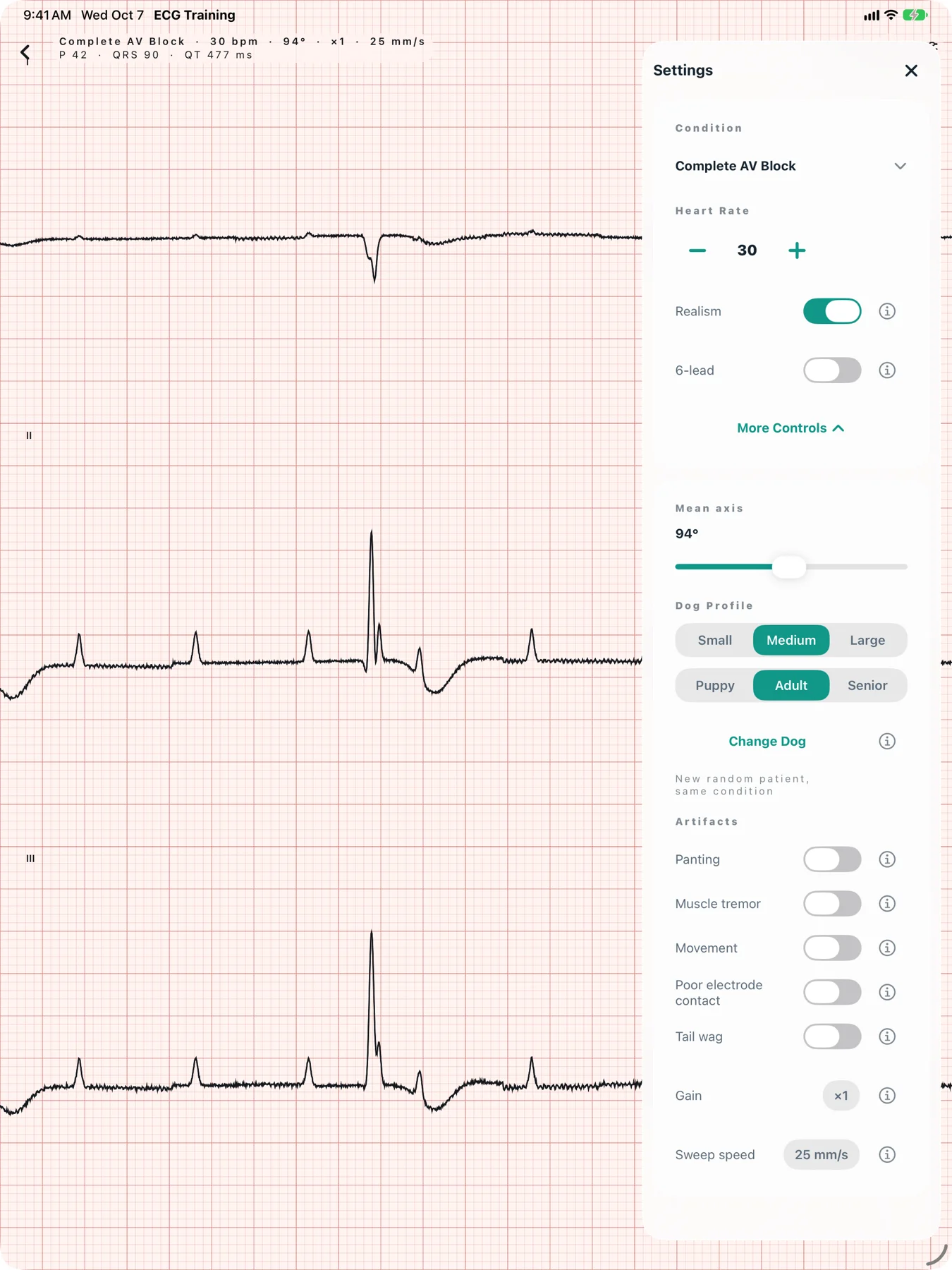
Every control acts on the live tracing, in the same clinical language you use at the ECG machine.
- Condition and heart rate
- Mean axis, inside the range that condition allows
- Dog size: small, medium or large. Age: puppy, adult or senior
- Change dog: a new random patient, same condition
- 6-lead view, gain and paper speed
- Freeze the tracing, or turn on a beep on each QRS
The readout gives the rate, the axis and the P, PR, QRS and QT intervals of the dog on screen.
Realism you can combine
A clean tracing teaches the pattern. A noisy one teaches the clinic.
- Extra realism layer
- Baseline wander, muscle noise, electrode micro-noise and the effect of the respiratory rate.
- Artifacts, on or off
- Panting, muscle tremor, movement, poor electrode contact and tail wag. Turn on one or several, and learn to tell an artifact from an arrhythmia.
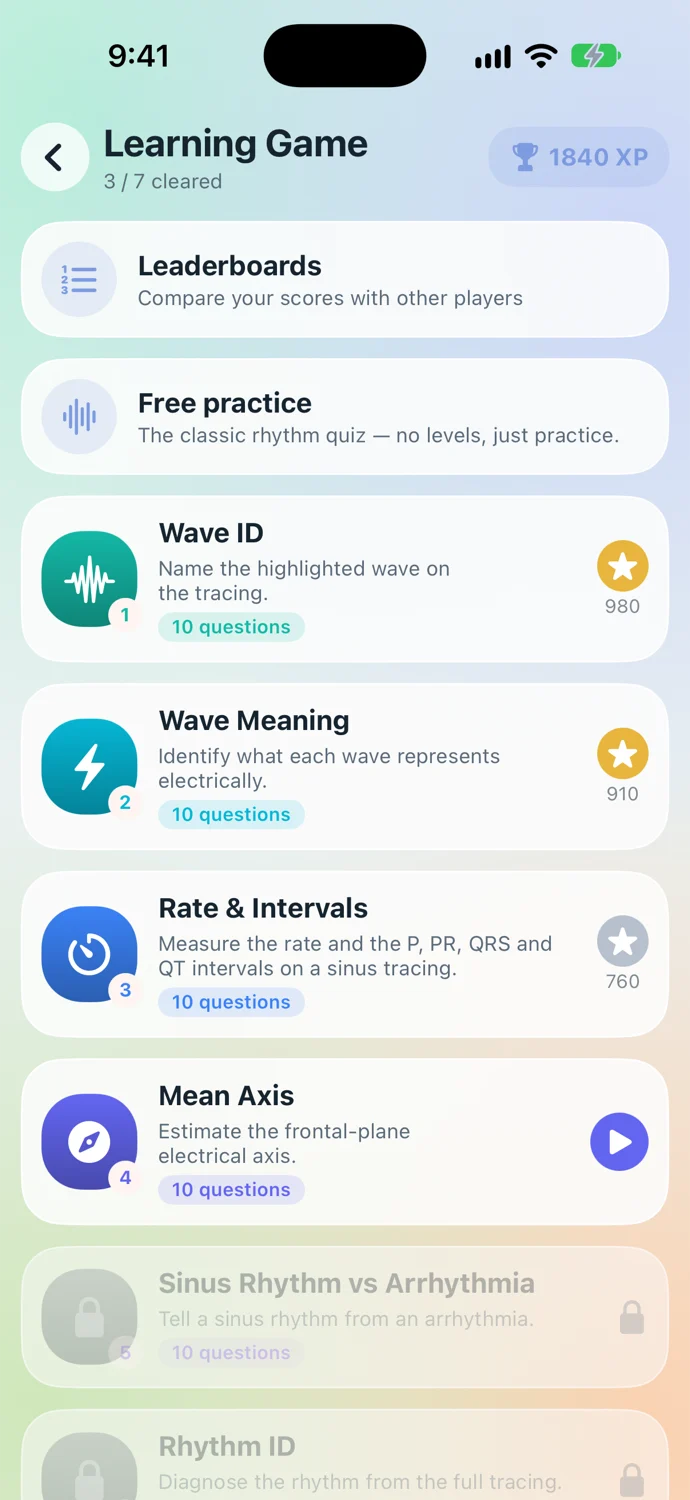
Seven levels. One wrong answer ends the last one.
Practice is a game with points, medals, XP and leaderboards.
- Wave ID. Name the highlighted wave on the tracing.
- Wave Meaning. What each wave represents electrically.
- Rate & Intervals. Measure the rate and the P, PR, QRS and QT intervals.
- Mean Axis. Estimate the frontal-plane electrical axis.
- Sinus Rhythm vs Arrhythmia. Tell one from the other.
- Rhythm ID. Diagnose the rhythm from the full tracing.
- Sudden Death. Up to 20 rhythms in two minutes.
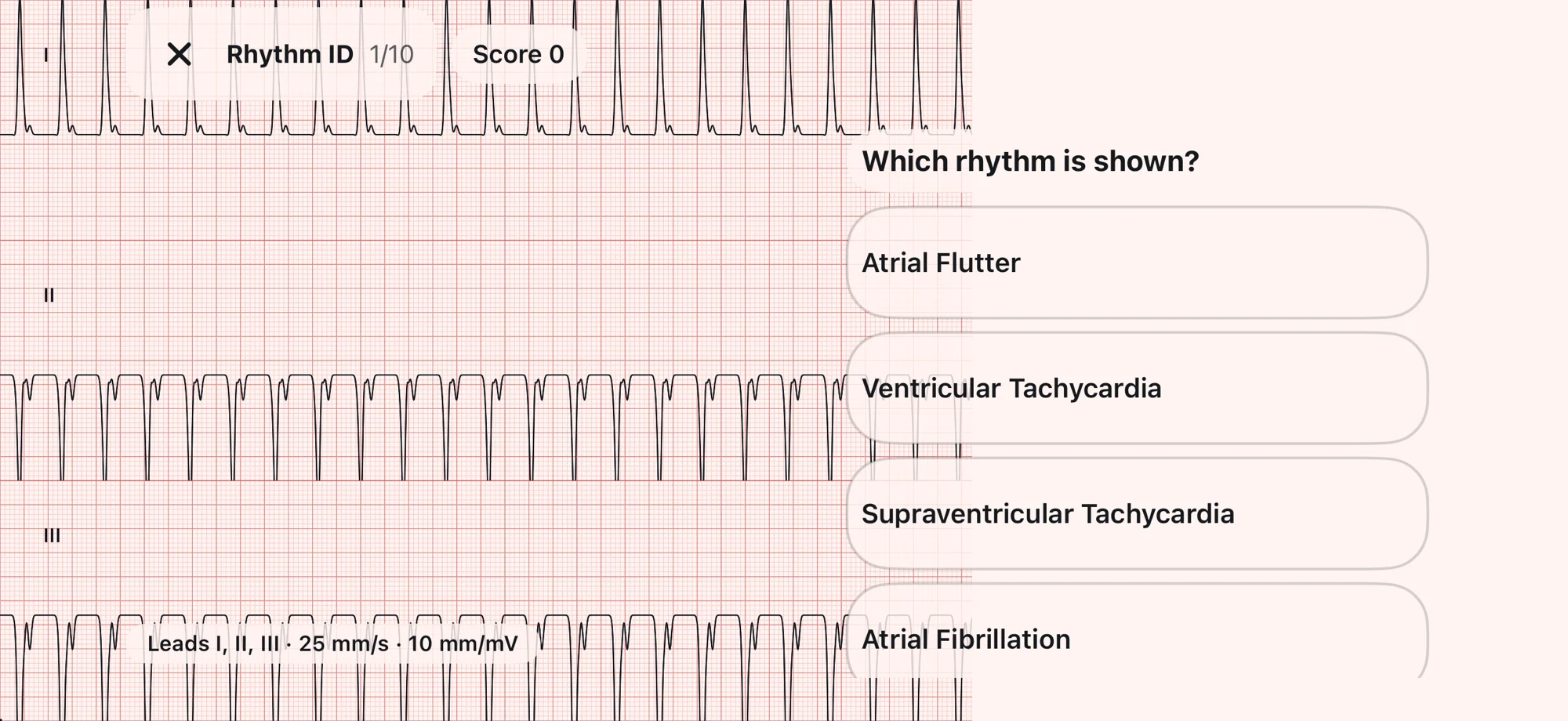
Read it before you answer.
Every tracing states how it was recorded: the leads, the paper speed and the gain. Fast answers score more, and so do streaks.
There is also a free practice quiz with no levels. Choose what to be tested on: tachyarrhythmias, conduction blocks, premature complexes, atrial enlargement, axis deviation, or everything.
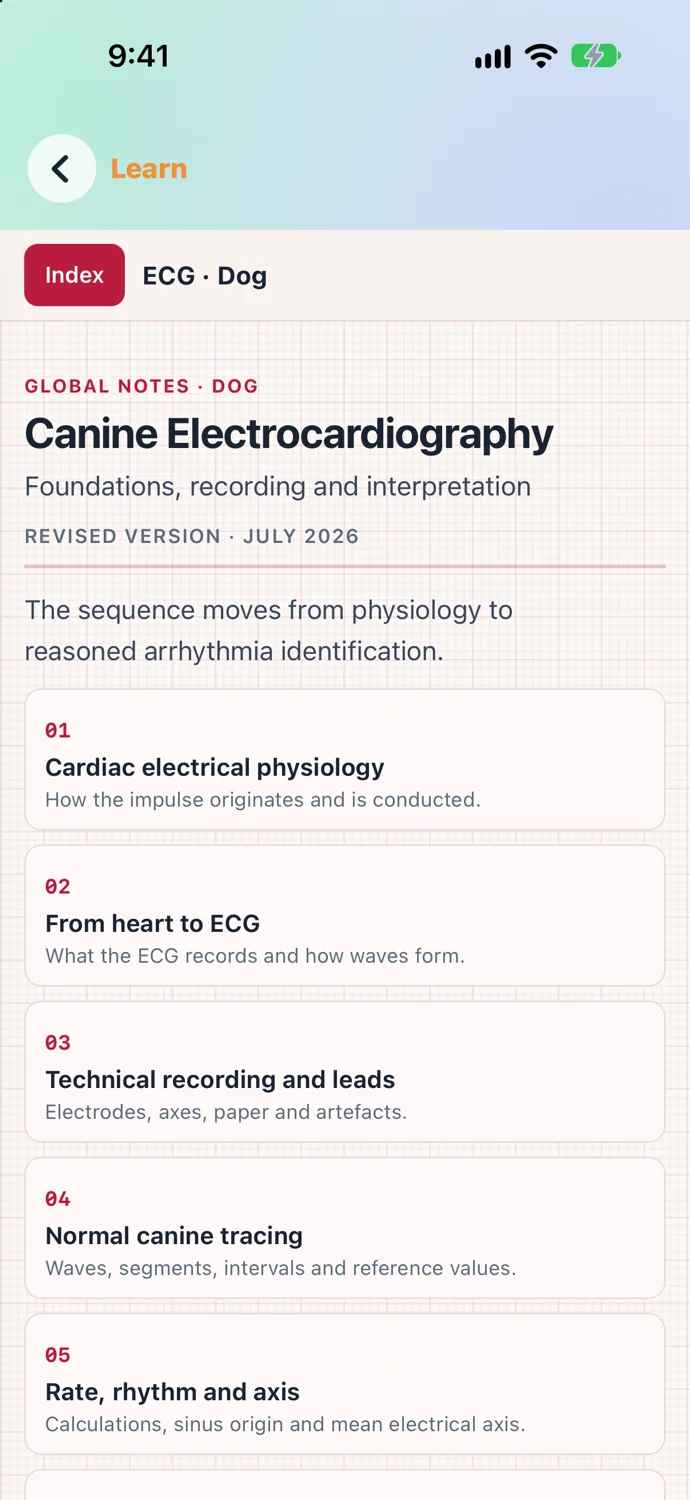
The theory, next to the tracing.
Canine Electrocardiography: foundations, recording and interpretation.
The study library moves from physiology to reasoned arrhythmia identification: cardiac electrical physiology, from heart to ECG, technical recording and leads, the normal canine tracing, rate, rhythm and axis, and a ten-step reading method. Guides, tables and reference values, in the app.
The rest, in short
- Free to start
- Open the app and the simulator runs on a normal sinus rhythm. No account is needed.
- Premium
- All 20 conditions, every control, and Learn and Practice with progress and medals. A monthly or yearly subscription, managed by the App Store or Google Play.
- Your account
- Only Premium and the leaderboards need one. You sign in with Apple or Google, and you can delete the account in the app at any time. Read the privacy policy.
- In your language
- English and Spanish, including the study library. You can switch in the app.
- For learning only
- The tracings are simulated. The app does not record, read or interpret the ECG of a real animal.
ECG Training for iPhone, iPad and Android
Free to download, with a Premium subscription. Coming soon to the App Store and Google Play. Questions: mcebrian (at) ik.me
ECG Training is for instruction and learning only. It is not a medical device, and it must not be used to diagnose, monitor or treat any animal. Clinical decisions belong to a qualified veterinarian. Read the terms.